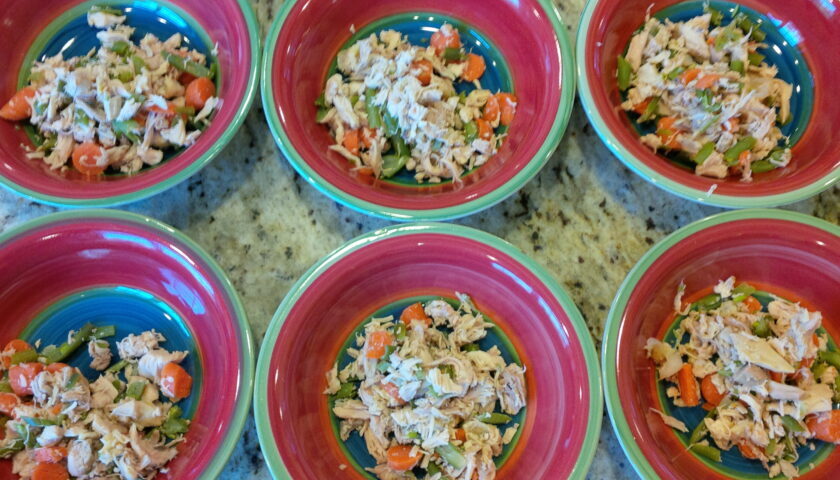
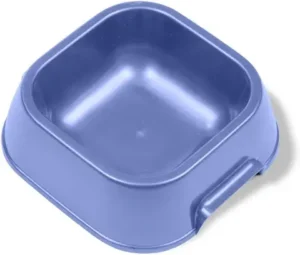
 When I was a kid, and dogs replaced dinosaurs (just wanted to see if you were paying attention), dog food bowls were made of plastic. Some were ceramic or aluminum, but plastic was cheap, practical, and almost indestructible.
The alternatives were ceramic or aluminum. The ceramic bowls contained lead and broke too easily. Aluminum corroded. Plastic held bacteria.
 Stainless steel replaced all three materials as it was non-porous, didn’t hold bacteria, didn’t chip or break, and could be washed in industrial machines, making stainless steel dog food bowls ideal for shelters, kennels, breeders, and veterinary offices. Eventually, manufacturers were able to mass-produce stainless-steel bowls in sufficient quantities to make them pet-parent-affordable.
Just like everything else, the stainless-steel dog food bowl, which was the Hallmark of being sanitary, durable, and safe for dogs, started to be manufactured using cheaper alloys.
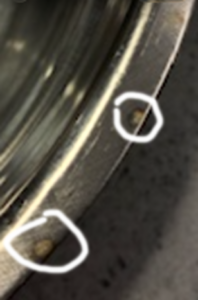 Now that you are up to speed, if you have stainless-steel bowls, especially the ones that are included with a dog food bowl stand, you might notice that after several uses and washings, especially if you use a dishwasher as I do, the bowls you thought were 304 real stainless-steel are now pitted and rusted. I circled them in white.
Do you see brown spots on your dog’s stainless-steel food bowls? Take a closer look. It’s probably pitted and rusting, and your dog may be licking that.
What is 304? First, let me tell you that your kitchen sink, stainless- steel cookware, and food-processing appliances and equipment are most likely made of, and should be made of, 304 stainless-steel and nothing inferior to that.
 304 = 18/8. Let me explain. 304 is just a catalog number used by the American Iron and Steel Institute. 18/8 means 18% chromium, which prevents rust, and 8% nickel, which improves the metal’s resistance to corrosion and adds strength. Now you’re thinking, then what is the other 74%? The other 74% is mostly iron, with traces of other elements to make the formula the stainless steel we have all come to know and love.
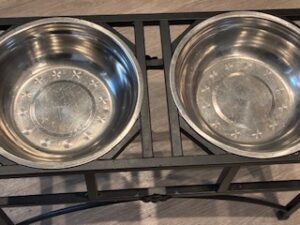
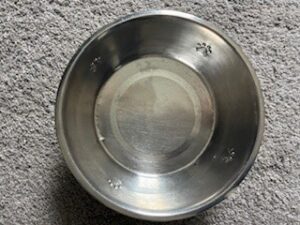
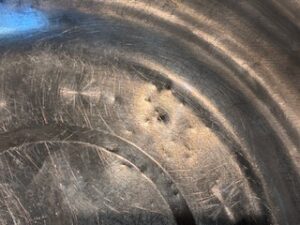 All that said, I will show you an authentic 304 stainless-steel bowl that is about twenty (20) years old. I will also show you a faux stainless-steel bowl that is about one (1) year old and originally came with a dog food bowl raised stand purchased from a major home décor store. This way, you can decide for yourself if the stainless-steel bowls you’re feeding your dog out of are the real deal.
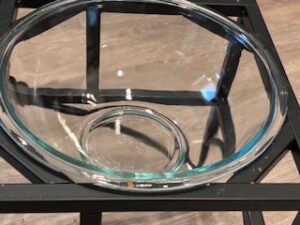
Movin’ on…What other choice do we have? I can only tell you what I use for my dogs. My large-breed dog has a stand for a large-breed dog food bowls. There are two (2) Pyrex 2.5-quart glass bowls replacing the stainless-steel bowls.
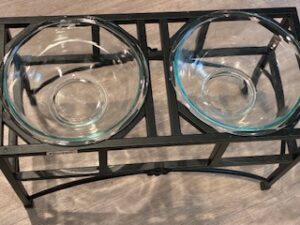
Here’s a photo. The bowls go in the dishwasher after every meal. They are securely in place in the dog food bowl stand. He likes to lick his bowl after most of the food has been eaten. Licking stainless-steel–not so much. Yes, Pyrex is durable but breakable, but it cannot fall out of its holder.
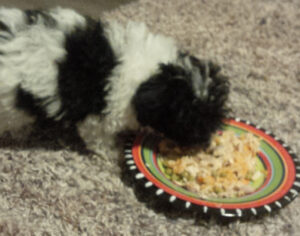
My little sweet baby toy breed dogs like to eat from flat salad dishes that are part of a porcelain dishware set. It’s easier for them to pick at the choice of food in the dish than if the food were piled in a bowl. Of course, those dishes also go in the dishwasher after every meal.
Takeaways. Of course, the choice is yours to make. The options are more than you might have thought. Not everything is what you think you are buying. The dog food bowl is as important as the food you put in it. Wait! Why? Because the stainless steel may rust, be unsafe, and unhealthy, and it may also alter the taste of your dog’s food. Remember to wash your dog’s food bowls after each meal.